You're here:
SaaS Sales Tax by State: Is Your SaaS Taxable in 2026?
In this article
- Is SaaS subject to sales tax?
- How states classify SaaS for sales tax
- SaaS sales tax by state
- What changes for SaaS sales tax on January 1, 2027
- When you have to collect: economic nexus for SaaS
- Where a SaaS sale counts as consumed
- How exempt SaaS sales work
- How to handle SaaS sales tax compliance
- Where to start
Your first US customers sign up from Texas, Washington and California. The same week, the question lands: do you charge sales tax on the subscription? No state wrote a SaaS sales tax rule from scratch. Each one stretched an older rule to fit, so the answer changes every time you cross a state line.
Short answer: SaaS is taxable in some states and not in others, and you collect only where you also have nexus. As of October 2026, 15 states and Washington, D.C. tax SaaS in full, six more tax part of it, and California and Colorado start on January 1, 2027.
The rest of this post is built to be checked, not trusted. Every state below links to the tax authority, statute or ruling it rests on, and to our guide for that state, which has the rates and thresholds. If you only need your own states, jump to the table.
Is SaaS subject to sales tax?
Sales tax has no federal layer, so there is no single answer. A jurisdiction taxes SaaS only if its law reaches it, and the law was written for boxes of software and hours of consulting, not subscriptions.
Two questions decide your exposure, and they are separate:
- Does the state tax your product? That is a taxability question, answered row by row in the table below.
- Do you have nexus there? That is a connection question, covered in the nexus section.
You collect tax only when both answers are yes. Mixing them up is the most common mistake we see. A founder reads that Texas taxes SaaS and starts to collect sales tax from every customer in the country.
How states classify SaaS for sales tax
No state invented a SaaS tax. Each one picked an existing category and decided SaaS fits inside it. The category matters, because it explains the quirks you will see in the table.
- Tangible personal property. Prewritten ("canned") software counts as property, and some states extend that to hosted access. Pennsylvania taxes SaaS this way.
- Data processing or information services. Texas taxes SaaS as a data processing service, and Ohio taxes it when it is bought for business use.
- A SaaS-specific category. Kentucky taxes "prewritten computer software access services", and Washington calls SaaS a "digital automated service".
- Outside the tax base. Many tax only physical goods, so hosted software never enters. Idaho goes further and excludes remotely accessed software by name.
This is also why sales tax on software varies so much. Three habits repeat across states:
- Downloaded software is taxed more often than hosted software. Wisconsin, for example, does not tax access when the customer does not operate, control or physically access the server.
- Custom software is usually exempt. Utah, California and Colorado all draw the line between prewritten and custom.
- Handing over code can change the answer. Michigan says a desktop agent or local client can make a hosted product taxable, and Illinois looks at APIs, applets and agents. If your product ships an app or an SDK, read those two states twice.
SaaS sales tax by state
We checked each row against the state's own tax authority, statute or ruling in October 2026. The state name links to our guide with its rates and nexus thresholds. A tax advisor should confirm the edge cases, because states change these rules often and several rows have local layers.
Which states tax SaaS
| Jurisdiction | SaaS taxable? | What to know |
|---|---|---|
| Arizona | Taxable | Taxed under the transaction privilege tax as a rental of personal property. Cities add their own tax. Arizona Legislature fiscal note. |
| District of Columbia | Taxable | Taxed as a data processing service at 6%. The planned rise to 7% is postponed, so 6% applies through September 30, 2027. DC Office of Tax and Revenue. |
| Hawaii | Taxable | Not a sales tax. It is the 4% General Excise Tax on your gross income, which you may pass on to the customer. Counties can add a surcharge. Hawaii Revised Statutes 237. |
| Kentucky | Taxable | 6% since January 1, 2023, under the category "prewritten computer software access services". KRS 139.200. |
| Louisiana | Taxable | State and local tax since January 1, 2025. Narrow exemptions exist for commercial production and for FDIC-insured financial institutions. Louisiana Department of Revenue guidance. |
| Massachusetts | Taxable | 6.25%. Rights to use software installed on a remote server count as a taxable transfer. 830 CMR 64H.13. |
| New Mexico | Taxable | Charged through the gross receipts tax, which falls on you as the seller. You may pass it on if you state it separately. New Mexico Taxation and Revenue Department. |
| New York | Taxable | Taxed as a license to prewritten software, at state and local rates. A sale to a buyer with users in several places is split across them. New York tax bulletin. |
| Pennsylvania | Taxable | Taxed since August 1, 2016 as canned software, which the state treats as tangible personal property. Allegheny County and Philadelphia add local tax. Pennsylvania Department of Revenue. |
| Rhode Island | Taxable | 7% since October 1, 2018, as vendor-hosted prewritten computer software. Rhode Island advisory 2018-38. |
| South Carolina | Taxable | Taxed as a communications service. Downloaded software is generally not taxed, but hosted access is. South Carolina Department of Revenue. |
| South Dakota | Taxable | Every service is taxable unless the law exempts it, and SaaS has no exemption. Municipalities add their own tax. South Dakota Codified Laws 10-45-4. |
| Tennessee | Taxable | Remote access is taxed as software use. The sale is sourced to the customer's residential or primary business address. Tennessee Letter Ruling 16-01. |
| Utah | Taxable | The law names "seller-hosted prewritten computer software". Custom software is not taxable. Utah Code 59-12-103. |
| Vermont | Taxable | Taxable since July 1, 2024. Remote access was exempt before that date. Vermont Department of Taxes. |
| Washington | Taxable | SaaS is a "digital automated service", subject to retail sales tax and the retailing B&O tax. Related IT services are also taxable since October 1, 2025. Washington Department of Revenue. |
States that tax part of SaaS
The catch in these states is who is buying and where the software runs. Check the buyer type before you decide how to invoice.
| Jurisdiction | SaaS taxable? | What to know |
|---|---|---|
| Connecticut | Partly taxable | 1% when sold to a business for its own use, 6.35% for personal use. Connecticut special notice 2019(8). |
| Iowa | Partly taxable | Taxable since January 1, 2019, but exempt when a commercial enterprise buys it and uses it only for the business. Local option tax applies to taxable sales. Iowa Department of Revenue. |
| Maryland | Partly taxable | 6% when bought for individual use. 3% when bought for commercial use in an enterprise computer system, since July 1, 2025. Maryland Technical Bulletin 56. |
| Mississippi | Partly taxable | Taxable when hosted on servers in Mississippi. SaaS hosted outside the state and used only over the internet is not taxable since July 1, 2023. Mississippi SB 2449. |
| Ohio | Partly taxable | Taxable when bought for business use, as data processing or electronic information services. Not taxable for personal use. Ohio Department of Taxation. |
| Texas | Partly taxable | Taxed as a data processing service, but 20% of the charge is exempt, so tax applies to 80% of the price. Texas Comptroller. |
States that start taxing SaaS on January 1, 2027
| Jurisdiction | SaaS taxable? | What to know |
|---|---|---|
| California | Taxable from January 1, 2027 | Not taxable until December 31, 2026. SB 122 then adds software accessed remotely to the tax base, at normal rates. CDTFA Special Notice L-1036. |
| Colorado | Taxable from January 1, 2027 | Exempt at state level until December 31, 2026. HB26-1223 then leaves only custom software and negotiated-license software exempt. Colorado final fiscal note. |
States that do not tax SaaS
Not taxable does not mean untaxed everywhere. Chicago taxes SaaS through a city lease tax even though Illinois does not, and several states tax the same product when it is downloaded.
| Jurisdiction | SaaS taxable? | What to know |
|---|---|---|
| Arkansas | Not taxable | Software delivered electronically is not taxable. Arkansas Code of Rules. |
| Florida | Not taxable | Not taxable when nothing tangible is transferred. The ruling binds only the taxpayer who asked, and sales bundled with hardware are taxable. Florida TAA 16A-014. |
| Georgia | Not taxable | Not taxable, because no physical goods are sold. Georgia Letter Ruling 2019-04. |
| Idaho | Not taxable | The law excludes remotely accessed software from the property tax base. Idaho Code 63-3616. |
| Illinois | Not taxable at state level | The state does not tax SaaS, unless you give the customer an API, applet or agent. Chicago taxes it as a lease at 15% since January 1, 2026. Illinois letter ruling ST 24-0044-GIL. |
| Indiana | Not taxable | Software accessed remotely without a download is not a retail transaction. Indiana Bulletin 8. |
| Kansas | Not taxable | Remote access is not a lease when the customer has no control over the software. Downloaded software is taxable. Kansas EDU-71R. |
| Maine | Not taxable | Not taxable when accessed from an out-of-state server with nothing to download. If the license allows a download and the sale is billed to Maine, it is presumed taxable. Maine Rule 326. |
| Michigan | Not taxable | Not taxable when no code is delivered. It can become taxable if you give the customer a desktop agent or local client. Michigan RAB 2023-10. |
| Minnesota | Not taxable | Subscriptions to online-hosted software are not taxable. Downloaded prewritten software is. Minnesota Department of Revenue. |
| Missouri | Not taxable | The state's own rule says the sale of software as a service is not subject to tax. Missouri Letter Ruling 8250. |
| Nevada | Not taxable | Only physical goods are taxed, and software delivered electronically is not. Nevada Department of Taxation. |
| New Jersey | Not taxable | Most SaaS is not taxable. SaaS that meets the definition of an information service is. New Jersey TB-72. |
| North Carolina | Not taxable | The Department of Revenue does not tax access to cloud-based software. Downloaded software is taxable. North Carolina letter ruling 2018-0005. |
| Oklahoma | Not taxable | Prewritten software delivered electronically is exempt, which takes SaaS outside the tax. Oklahoma Administrative Code 710:65. |
| Virginia | Not taxable | Cloud computing is treated like an electronic download, so it is not taxed unless something tangible is provided. Virginia ruling 24-109. |
| Wisconsin | Not taxable | Not taxable when the customer does not operate, control or physically access the server. Downloaded software is taxable. Wisconsin Department of Revenue. |
| Wyoming | Not taxable | Hosted software is not on the list of taxable items. No state document names SaaS, so this rests on the statute. Wyoming Sales Tax 101. |
States with no sales tax
| Jurisdiction | SaaS taxable? | What to know |
|---|---|---|
| Alaska | No state sales tax | About 110 municipalities tax sales, rents and services, so check each city you sell into. Alaska Department of Commerce. |
| Delaware | No sales tax | No sales tax, but a gross receipts tax on businesses operating in Delaware. Delaware Division of Revenue. |
| Montana | No sales tax | No general sales tax. Montana Department of Revenue. |
| New Hampshire | No sales tax | No general sales tax. New Hampshire Department of Revenue. |
| Oregon | No sales tax | No general sales or use tax. Oregon Department of Revenue. |
States where we found no clear official guidance
For these four states, no tax authority text we could find says whether SaaS is taxable. We will not guess. Ask the state department of revenue for written guidance before you decide, and keep the reply.
| Jurisdiction | SaaS taxable? | What to know |
|---|---|---|
| Alabama | No clear guidance | Rule 810-6-1-.37 treats all software as taxable property but never mentions remote access. Alabama Administrative Code. |
| Nebraska | No clear guidance | The regulation taxes software "regardless of the manner in which it is conveyed" and does not address SaaS. Nebraska Department of Revenue. |
| North Dakota | No clear guidance | The law taxes software delivered electronically or by load and leave. It says nothing about remote access. North Dakota Century Code 57-39.2. |
| West Virginia | No clear guidance | The law exempts "electronic data processing services", and no official ruling says whether SaaS falls inside. West Virginia Code 11-15-9h. |
What changes for SaaS sales tax on January 1, 2027
California and Colorado both signed laws in 2026 that bring SaaS into the tax base on the same date. That is less than three months away, and both states have large buyer bases.
- California. SB 122 adds software accessed remotely to the tax base. SaaS becomes taxable at the normal state and local rates, with no split between business and consumer buyers. Custom software stays exempt.
- Colorado. HB26-1223 narrows the exemption so that only custom software and software under a negotiated license stay exempt. Local taxes can follow on their own schedule, so check each city you sell into.
If you have nexus in either state, register before January 1 so you can collect from your first invoice of the year.
The two states are not the only recent movers. Rules that changed since 2023:
- Kentucky started taxing SaaS on January 1, 2023.
- Mississippi exempted out-of-state-hosted SaaS on July 1, 2023.
- Vermont started taxing it on July 1, 2024.
- Louisiana started on January 1, 2025.
- Maryland set a 3% business-use rate on July 1, 2025.
- Washington added IT services on October 1, 2025.
- Chicago raised its lease tax to 15% on January 1, 2026.
When you have to collect: economic nexus for SaaS
A state that taxes your product can make you collect sales tax only if you have nexus. Nexus is a connection strong enough to give the state a right to tax your sales, and there are two ways to get one.
- Physical presence. An employee, contractor or office in the state can create nexus on its own, before you sell a dollar there. A remote hire in Colorado counts.
- Economic nexus. Since the Wayfair decision of 2018, a state can claim nexus from your sales into it, with no presence required. Each state sets its own threshold, and some count transactions as well as revenue.
Because state tax laws set their own thresholds, our economic nexus guide and each state guide in the table list them, and our nexus explainer covers the types. Crossing a threshold in a state that does not tax SaaS costs you nothing in tax. Crossing it in a state that applies tax on SaaS means you register and collect.
This is where most SaaS companies slip: sales grow in a state, nobody watches the running total, and the threshold passes unnoticed. Quaderno Monitor tracks tax thresholds before you cross them.
Where a SaaS sale counts as consumed
When you sell to a customer in a taxing state, you still have to decide which state, and which local rate, the sale belongs to. Most jurisdictions source SaaS to where the customer uses it, and a few give you a rule:
- Tennessee sources the sale to the customer's residential or primary business address.
- New York splits a sale across the places where users are located when a business buys seats for several sites.
- Maryland uses multiple points of use certificates for that case, and its Comptroller changes the rules for them from January 1, 2027.
A billing address is a good default and a poor guarantee. Record where the customer says its users sit, and keep it with the invoice.
How exempt SaaS sales work
Some customers buy SaaS tax free. In Iowa, for example, a commercial enterprise that uses SaaS only for its business is exempt. Government agencies and nonprofits are exempt in many states.
The mechanics are the same everywhere:
- The customer sends a valid exemption certificate for your state.
- You check that it is complete and still current.
- You stop charging tax and keep the certificate on file.
Without the certificate, an auditor treats the sale as taxable, and the tax you did not collect becomes yours. Our post on the tax exemption certificate explains what to ask for and when it expires.
How to handle SaaS sales tax compliance
Once you know where you owe, the work is a loop you run every quarter:
- Map where your customers are. Group revenue by state, and by city where local tax applies.
- Check nexus per state. Compare the running total against each state's threshold, and list where you have employees or contractors.
- Match the table to your product. Confirm the state taxes your type of SaaS, including the business-use and hosting catches.
- Register before you collect. Collecting tax without a permit is a problem of its own. Each state guide links the registration steps.
- Charge the right rate. Use the destination state's rate plus any local tax, sourced to where the customer uses the software.
- File and remit on the state's schedule. Preparing a sales tax return covers what each filing needs.
- Keep your records. Certificates, addresses and invoices are what you show if a state asks.
Doing this by hand across 20 states is where SaaS businesses fall behind. Quaderno's tax engine assigns the correct tax code to every line item, so SaaS subscriptions are not taxed like physical goods or the other way around.
Know where you owe before you collect
Quaderno applies the right tax code to every line item and tracks tax thresholds before you cross them. Connect Stripe or your own checkout and test it on real transactions. Free for 7 days, no credit card.
Start your free trialWhere to start
You do not need to solve all 50 states at once. Start with the places where your customers already are, check nexus there, and make sure each one taxes your type of SaaS. That list is usually short, and it is the one that carries your real SaaS sales tax risk.
For SaaS sold outside the US, including VAT and GST, our worldwide SaaS tax guide covers the rest.
Know your states, watch your thresholds, and collect only where both say yes.
Note: At Quaderno we love providing helpful information and best practices about taxes, but we are not certified tax advisors. For further help, or if you are ever in doubt, please consult a professional tax advisor or the tax authorities.
Frequently Asked Questions
Is SaaS subject to sales tax?
It depends on the state. As of October 2026, 15 states and Washington, D.C. tax SaaS in full, and six more tax part of it. SaaS sales tax only applies to you where you also have nexus.
Do I need to collect sales tax on SaaS?
You collect SaaS sales tax only where two things are true: the state taxes your kind of SaaS, and you have nexus there. Nexus comes from physical presence, such as an employee or an office, or from sales above the state's economic nexus threshold.
When does SaaS trigger sales tax?
SaaS sales tax is triggered when you have nexus in a state that taxes it. Since the Wayfair decision in 2018, a state can claim nexus from your sales into it, even if you have no office or employees there.
How do exempt SaaS sales work?
For SaaS sales tax exemptions, such as Iowa's for commercial enterprises, you stop charging tax once the customer gives you a valid exemption certificate. Keep the certificate on file, because the state asks for it in an audit.
What determines where SaaS is consumed for sales tax?
For SaaS sales tax, most states source the sale to where the customer uses the software. Tennessee uses the customer's residential or primary business address, and New York splits the sale across the places where a business buyer's users are located.
Keep reading
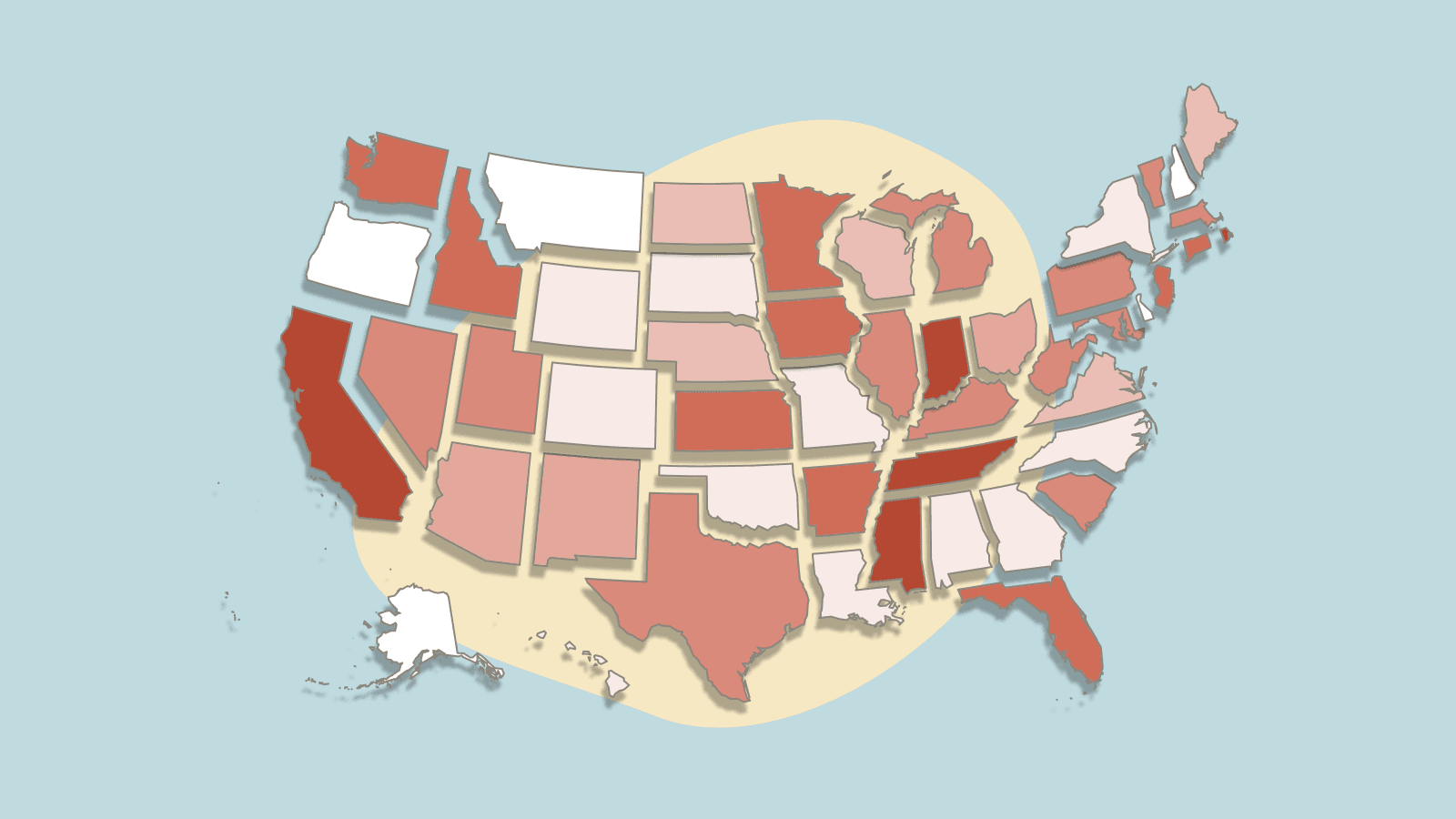
Sales Tax Nexus: A Complete Guide to Types, Laws, and Compliance
What is sales tax nexus? Learn the types (economic, physical, affiliate), how to determine nexus, and steps to comply with US sales tax laws.
Remote seller sales tax guide 2026: Nexus and calculation
Just because you are a remote seller doesn't mean you are off the hook when it comes to taxes. Learn how to calculate US sales tax as a remote seller!

US Sales Tax on Digital Products: State-by-State Guide
Sales tax on digital goods by state is tricky. Which states have sales tax? What's taxable? Learn everything here.
How to Register for a Sales Tax Permit
Do you need to register for a sales tax permit? Determine whether or not you need a seller's license, and find out how to get one.

Best Sales Tax Software in 2026: 10 Tools Compared
A comparison of ten sales tax compliance platforms, with 2026 pricing verified against each vendor's own page, what every tool refuses to do, and the state-funded program that makes filing free in 24 states.