You're here:
What is a tax engine? How tax determination software works
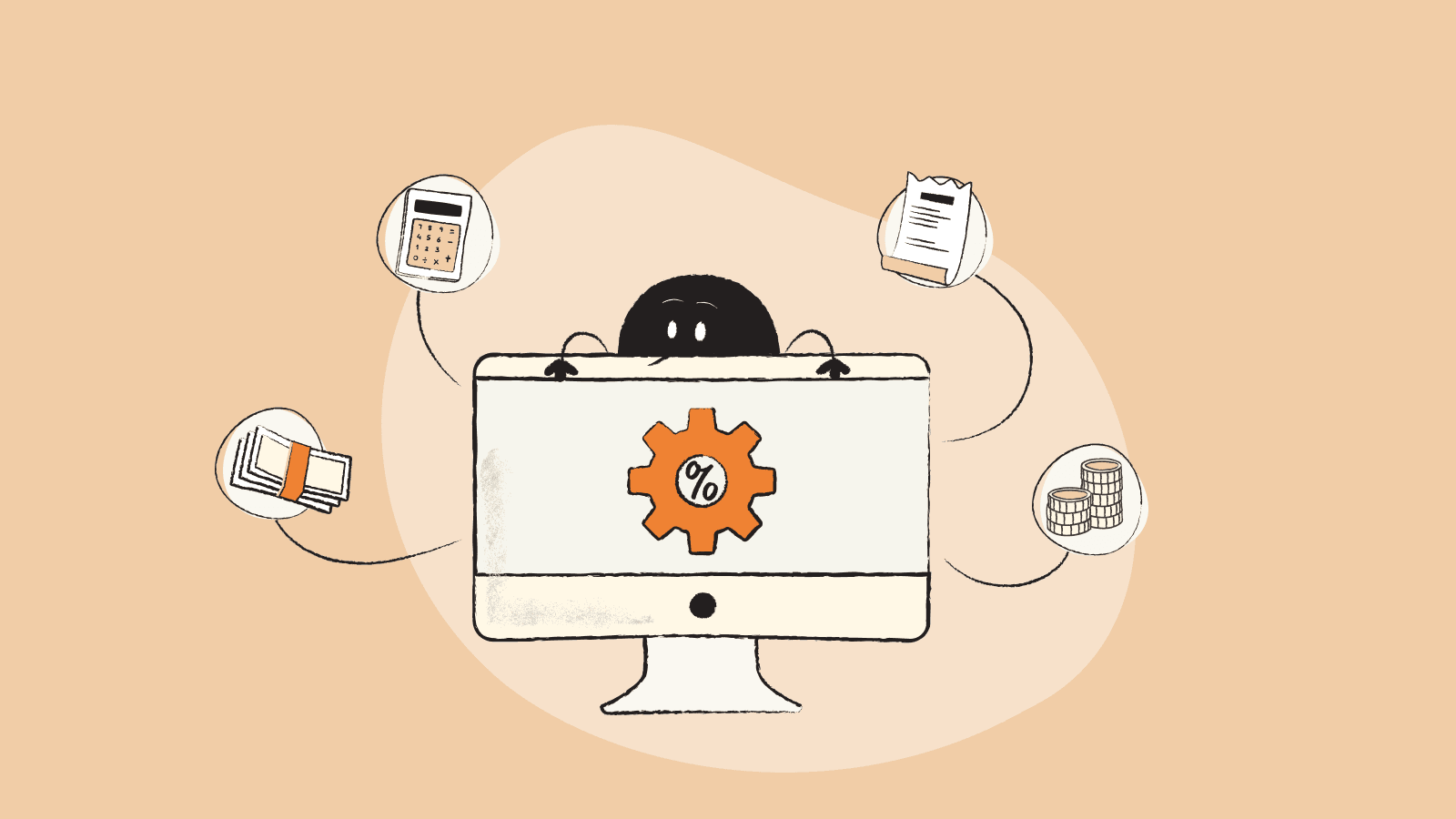
A customer in Berlin buys your $49 subscription. Your checkout charges them $49, because nothing in your billing setup knew that Germany wanted VAT on that sale. Eleven months later you find out, and by then the tax is no longer the customer's to pay. It is yours.
A tax engine is what stops that. This covers the operational part most explanations skip:
- What a tax engine works out on every sale
- What it needs from you to get the answer right
- What it hands back
- Whether your business has reached the point where one earns its cost
Short answer: A tax engine decides which indirect tax applies to a sale, whether that is US sales tax, VAT or GST, then works out how much. It answers two questions on every transaction: is this taxable here, and at what rate.
What is a tax engine?
Two jobs hide inside the name.
Determination comes first. A tax engine establishes where a sale is taxable, whether the thing you sold is taxable there, and which rule covers it. That is the hard half, and it is why these products are also sold as tax determination engines.
Calculation follows, and it is the straightforward half. Apply the rate, return the amount.
The taxes in scope are indirect taxes, charged on a transaction rather than on profit. That means US sales tax, value-added tax (VAT) across the EU and UK, and goods and services tax (GST) in Canada, Australia, India and beyond. If you want the distinctions, we have a breakdown of how the different consumption taxes work.
What a tax engine is not is a rate lookup table. A table gives you the sales tax rate in Ohio. A tax engine gives you the sales tax owed on one specific sale, in one specific place, to one specific customer, and who is liable for handing it to the authorities. That difference is the entire product.
How a tax engine determines what is owed
Every sale runs the same tax determination sequence.
- Place of supply. Where is this sale treated as happening? Physical goods usually follow the delivery address, digital services usually follow the customer's location.
- Classification. What was sold? Each product or service maps to a tax category, and the category drives which tax rules apply.
- Customer status. Business or consumer, and tax registered or not. In the EU this decides whether the reverse charge applies.
- Obligation. Do you have to collect tax here at all? Registration thresholds differ in every jurisdiction.
- Rate and rule. Only now does a number get applied.
The arithmetic was never the difficult part. Deciding which of several thousand tax rules governs one sale is the difficult part, and that is why determination sits in the product's name.
Take the Berlin subscription. Sold to a consumer, German VAT applies and you charge it. Sold to a VAT-registered German company, the reverse charge moves the obligation to the buyer and you charge nothing. Same product, same country, same price, two correct answers that differ.
Standard VAT rates in the EU must be at least 15%, with each country setting its own reduced rates above that floor. Keeping that rule set current as tax laws and regulations move is the actual thing a tax engine vendor sells you.
What a tax engine needs from you, and what it gives back
Tax determination is only as accurate as the facts your systems hand it.
| What you send | Why it is needed | Example |
|---|---|---|
| Customer location | Sets the place of supply and the jurisdiction | Billing address, shipping address, IP |
| What you sold | Drives the tax category and the treatment | SaaS subscription, ebook, physical mug |
| Customer tax status | Decides B2B treatment and the reverse charge | A validated EU VAT number |
| Transaction date | Rates and rules change on fixed dates | September 3, 2026 |
| Amount and currency | The base the calculation runs on | 49.00 USD |
| Marketplace involvement | Liability can shift to the platform | Sold via a third-party storefront |
Back out comes:
- The amount due
- The rate applied, and the jurisdiction it belongs to
- Who is liable for remitting it
- A line-item breakdown you can put straight onto an invoice
All of it inside the checkout request, before the customer sees a total. Under a second is the working expectation.
The behavior worth testing before you buy is what the tax engine does when it does not know. Silent guessing is the expensive failure mode, because wrong tax calculations arrive at volume and look exactly like correct ones.
Why your ERP or billing platform is not enough
Your ERP does calculate tax, and for a business selling in one jurisdiction that is genuinely sufficient.
| Capability | Native ERP or billing tax | Dedicated tax engine |
|---|---|---|
| Jurisdiction coverage | Home market, sometimes a handful more | Everywhere the vendor supports |
| Rate updates | You maintain the table | Maintained by the vendor |
| Product taxability | A flat rate per product, if any | Category rules per jurisdiction |
| Exemptions and reverse charge | Manual, or absent | Applied automatically |
| Audit trail | The invoice record | The rule applied, per transaction |
The first break point is maintenance rather than capability. A native tax table gets configured once, correctly, and then ages out of compliance. Tax rates move, thresholds move, product classifications get reinterpreted, and nobody on the team owns the job of noticing.
The second is the border. A billing platform that handles US sales tax competently often has no concept of place of supply or the reverse charge, because it was built for domestic sellers. Your first EU sale is where that surfaces.
The real purchase: not the calculation, but someone else maintaining the tax rules. Sales tax automation stops being optional at whichever break point your business reaches first.
When you need a tax engine, and when you do not
Tax engine vendors rarely say this, so we will: plenty of businesses do not need one yet.
You probably do, if:
- You sell into more than one tax jurisdiction
- You have crossed a registration threshold somewhere, or are close to it
- Your sales volume is past the point where a person could check a transaction by hand
- You sell products and services with different tax treatments
- You sell through marketplaces, where liability can shift to the platform
You probably do not, yet, if:
- You sell in a single jurisdiction
- You sell one kind of product
- Your sales volume is low enough to review by hand
- You have actually checked what your billing systems do with tax, rather than assuming
Tax obligations usually begin at a registration threshold, and every jurisdiction sets its own. That is why our tax guides are organized by place rather than crammed into one page.
Those thresholds exist because of South Dakota v. Wayfair, the 2018 Supreme Court decision that let US states require sales and use tax collection from sellers with no physical presence there.
What a tax engine does not do
Four boundaries, and the first two cause most of the confusion in this category.
It does not register you. Establishing that you owe tax somewhere is not the same as being registered to collect it there. Collecting sales tax without a registration is illegal in most places, so registration comes first.
It does not necessarily file. Determination and filing are separate functions. Some vendors bundle them and many sell determination alone, so ask which you are buying.
It does not decide taxability for you. Somebody still has to map your catalog to tax categories. Get a product tax code wrong and the tax engine will apply the wrong treatment perfectly consistently, on every sale, until someone catches it.
It does not fix the past. Switching one on today does nothing about those eleven months in Berlin. Historic exposure is a separate conversation, and usually a voluntary disclosure one.
The limitation: a tax engine tells you what tax is owed. It does not make you registered, filed, or forgiven for what came before.
How to choose a tax engine
Four questions, in this order.
Does it cover where you actually sell? Not the vendor's headline jurisdiction count. The specific places your customers are, including the ones you plan to enter next year.
How are the tax rules maintained? Ask how a rate change reaches production, and how fast. That recurring tax compliance work is what you are paying for.
What does it connect to? Your store, your biller, your ERP, your accounting systems. A tax engine that needs a rebuild of your checkout costs more than its price.
Is filing included or separate? If separate, does the filing tool accept this tax engine's output? Selecting the right combination for your business needs matters more than picking the best single component. Two systems that do not exchange data leave you reconciling by hand.
For a vendor-by-vendor view, we compare the best sales tax software on pricing, coverage and what each one refuses to do.
Still weighing it up? How Quaderno handles tax calculation shows what a tax engine returns on a real sale, in more than 12,000 jurisdictions, with no tax table for you to maintain. If your setup is unusual, talk to a specialist.
If you run a platform or marketplace and want to embed tax compliance for your sellers under your own brand, Quaderno Connect is built for that use case.
See the determination on your own sales
Connect Stripe, Shopify or your own checkout, and Quaderno applies the right tax to real transactions while you watch. Free for 7 days, no credit card.
Start your free trialNote: At Quaderno we love providing helpful information and best practices about taxes, but we are not certified tax advisors. For further help, or if you are ever in doubt, please consult a professional tax advisor or the tax authorities.
Frequently Asked Questions
What is the difference between a tax engine and tax software?
A tax engine determines and calculates the tax on a transaction. "Tax software" is a broader label that usually also covers registration, filing and reporting. Some products do both, so check which functions you are actually buying before you sign.
What data does a tax engine need to calculate tax?
A tax engine needs the customer's location, what you sold, the customer's tax status, the transaction date, and the amount and currency. Missing or incorrect inputs produce confidently wrong answers, so the quality of your customer and product data sets the ceiling on accuracy.
Does a tax engine file my tax returns?
Not necessarily. A tax engine determines and calculates tax, and filing is a separate function that some vendors bundle and many sell separately. Confirm which you are getting rather than assuming filing is included.
Do I need a tax engine if I only sell in one country?
Probably not yet. One jurisdiction, one product type and low volume usually sit within what a billing platform handles natively, so a tax engine adds little. That changes when you add a second jurisdiction, sell products with different tax treatments, or cross a registration threshold.
How fast does a tax engine calculate tax?
Under a second. A tax engine runs the calculation inside the checkout request, because the customer has to see a total before they can pay, which makes latency a functional requirement rather than a performance nicety.
Can a tax engine work with my existing ERP or billing system?
Yes, through an API or a native integration. A tax engine replaces the tax logic inside your existing systems rather than replacing the systems themselves, so your ERP or biller stays where it is.
Keep reading

Best Sales Tax Software in 2026: 10 Tools Compared
A comparison of ten sales tax compliance platforms, with 2026 pricing verified against each vendor's own page, what every tool refuses to do, and the state-funded program that makes filing free in 24 states.

Sales Tax Compliance Outsourcing: What You Can Hand Over
Sales tax compliance is six separate jobs, not one. Here is exactly which ones a provider takes, which ones stay yours, and what the handover costs.

How to handle sales tax for physical products around the world
Selling physical goods? Learn how VAT, GST & sales tax apply globally, and discover tools to simplify compliance across multiple countries.
What is a tax jurisdiction?
Understand tax jurisdictions and why they matter. Learn how they impact sales tax, GST, and VAT collection, reporting, and compliance across regions.
What Is Invoice Automation? How It Works and Who Needs It
Invoice automation covers two very different jobs: the invoices you receive and the ones you send. Here's how each works, and what makes them valid.