You're here:
E-invoicing in France: requirements and deadlines for the September 2026 mandate
In this article
- What changes on 1 September 2026
- Who the French e-invoicing mandate applies to
- The e-invoicing timeline
- How French e-invoicing works
- E-reporting: what France wants beyond invoices
- Invoice statuses, and why corrections change
- Penalties, and the start-up tolerance
- Can you still send a PDF after 1 September 2026?
- How to prepare: a compliance checklist
- Where France fits in the bigger picture
- How Quaderno fits in
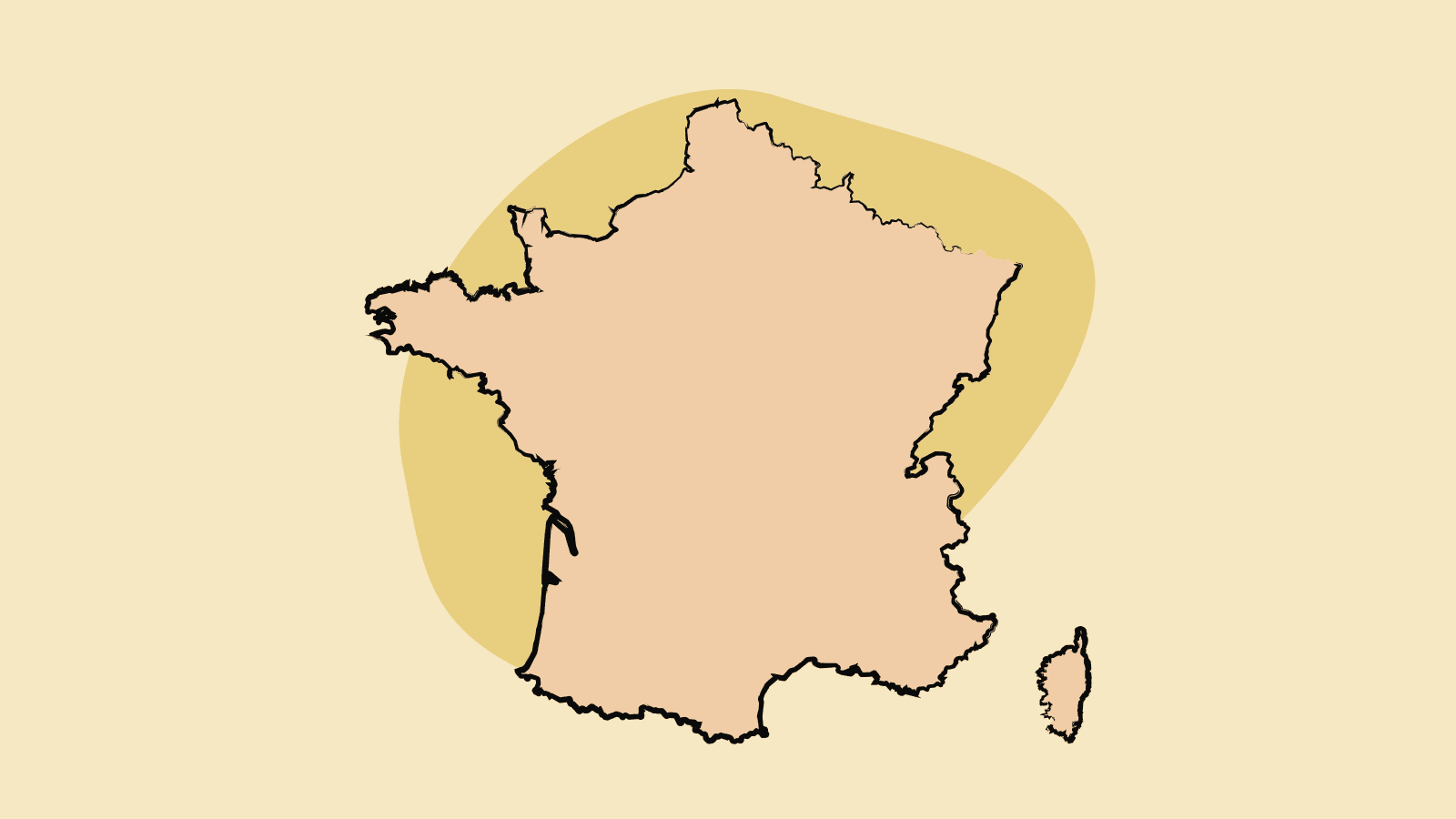
E-invoicing in France becomes mandatory on 1 September 2026. From that date, every business registered for French VAT must be able to receive electronic invoices through an approved platform. Large and intermediate-sized companies must also issue their invoices that way and start transmitting transaction data to the tax authorities.
If you have been waiting for the French B2B e-invoicing mandate to slip again, it is not slipping. And the reception obligation is the part most businesses overlook, because it applies whatever your size.
This guide covers who is in scope on each date, what an electronic invoice has to contain, how the approved platforms work, what e-reporting adds on top, and what actually happens if you are not ready in time.
What changes on 1 September 2026
- Every business subject to French VAT must be able to receive electronic invoices via an approved platform.
- Large companies and ETIs (intermediate-sized enterprises) must issue electronic invoices and transmit e-reporting data.
- Small and micro businesses get until 1 September 2027 to start issuing, but they must still be able to receive from September 2026.
- Paper and ordinary PDF stop being a compliant way to send invoices for companies in the issuing wave.
- Invoices must travel in a compliant, structured electronic format rather than as simple text on a page.
Everything else stays as it is: when the sale happened, what you owe, your right to deduct VAT. The mandate changes how invoices move, not the underlying commercial or tax rules.
Who the French e-invoicing mandate applies to
The e-invoicing obligation covers purchases and sales of goods and services between businesses established in France and subject to French VAT. That is broader than most people assume. It includes sole traders, liberal professions, micro-entrepreneurs and businesses under the franchise en base. There is no turnover threshold and no exemption for being small.
A business that never issues a single invoice is still in scope, because it will receive electronic invoices from its suppliers: energy, telecoms, software. Being able to accept them is the obligation.
VAT-exempt transactions stay outside the e-invoicing rules. For what counts as taxable in the first place, see our guide to France VAT.
Company categories and the 1 January 2025 reference date
Which wave you land in depends on your category, and the definitions use specific combinations of headcount, turnover and balance sheet total:
| Category | Definition |
|---|---|
| Micro | Fewer than 10 employees and turnover or balance sheet total of €2M or less |
| Small and medium (PME) | Fewer than 250 employees and turnover of €50M or less or balance sheet total of €43M or less |
| Intermediate (ETI) | Not a PME, fewer than 5,000 employees and turnover of €1.5bn or less or balance sheet total of €2bn or less |
| Large | More than 5,000 employees, or, below that headcount, turnover above €1.5bn and balance sheet total above €2bn |
The size of the business was fixed on 1 January 2025, assessed for each legal entity from the last financial year closed before that date. You cannot grow into a later category or shrink out of an earlier one.
This is the detail that catches people out, because most mandates elsewhere test the year before they start. France does not. If you were an ETI on 1 January 2025, you are issuing electronic invoices this September, whatever has happened to your numbers since. The rule is set out in the tax authority's own e-invoicing FAQ.
Note also that "medium" in the French sense sits in the PME band, which starts issuing in 2027, not 2026. The 2026 issuing wave is for large companies and ETIs only.
If your business is not established in France
The e-invoicing obligation applies to transactions between businesses established in France. If you are registered for French VAT but not established there, you generally fall under e-reporting rather than e-invoicing for your French transactions.
Two things to watch:
- The size test is not based on your French activity. For a foreign business that is not established in France for VAT purposes, headcount, turnover and balance sheet are assessed at the level of the entire foreign entity, regardless of how little it does in France. A large international group with modest French revenue is a large company, and lands in the September 2026 wave, not 2027.
- Acquisition e-reporting is deferred. For companies not established in France, the obligation to report acquisitions, where you are the party liable as the customer, starts on 1 September 2027 regardless of size. Outbound flows follow the normal size-based calendar.
The e-invoicing timeline
| Date | What happens |
|---|---|
| Since July 2025 | Voluntary exchange of electronic invoices through approved platforms, using the government directory |
| 1 September 2026 | All businesses must be able to receive electronic invoices. Large companies and ETIs must also issue them electronically and start e-reporting. |
| 1 September 2027 | Small and micro businesses must issue electronic invoices and start e-reporting. |
An earlier version of the mandate put the first wave in July 2024, staged through 2026. That calendar was replaced, so if you built a plan around it, rebuild. The two dates above are the ones that count.
How French e-invoicing works
Invoices no longer travel directly from you to your customer. They pass through an intermediary registered with the tax administration, which extracts the relevant data and forwards it on to the administration.
Two roles matter here, and the difference decides who is allowed to do what: the approved platform, which may transmit, and the dematerialization operator, which may not, and has to connect to one.
What is an approved platform (plateforme agréée)?
An approved platform, in French a plateforme agréée, is a private operator registered by the DGFiP through a dedicated registration service, for a renewable three-year term. Registration can be withdrawn for repeated failures. You will see it abbreviated to PA.
A PA handles four jobs:
- Issuing, transmitting and receiving e-invoices between supplier and customer, converting between formats where the two sides use different ones, while preserving the integrity, authenticity, readability and completeness of the data.
- Extracting invoice data and sending it to the tax administration.
- Transmitting data for operations that do not produce an electronic invoice.
- Transmitting payment data.
You choose your own PA. It does not have to be the same one your customer or supplier uses. Platforms interoperate, so you can exchange e-invoices with companies on a different PA without anything breaking. There were 137 registered platforms as of July 2026.
PAs used to be called PDPs, or plateformes de dématérialisation partenaires. If you are reading older material about e-invoicing in France that talks about choosing a PDP, it means the same actor under its previous name.
The critical point, in the tax administration's own words: only an approved platform is entitled to perform all the functions the reform provides for. There is no free public alternative for exchanging your invoices.
What is a dematerialization operator (opérateur de dématérialisation)?
A dematerialization operator, in French an opérateur de dématérialisation or OD, is a software provider: invoicing tools, accounting software, cash register systems, ERPs, electronic archiving. In plain terms it is usually the software you already use, without thinking of it as a player in the reform at all.
An OD is not registered by the tax administration. In practice that means:
| Capability | Opérateur de dématérialisation (OD) | Plateforme agréée (PA) |
|---|---|---|
| Registered by the DGFiP | No | Yes, and audited |
| Can transmit directly to the tax authorities | No | Yes |
| Can transmit e-reporting data | No | Yes |
| Must be connected to a PA | Yes | No. The approved platform is the connection point. |
So an OD can prepare fully compliant e-invoices, but something registered has to carry them the last mile. The DGFiP created a "Solution compatible Facturation électronique" label so you can identify invoicing software that meets the reform's requirements and is connected to a PA.
The practical advice from the tax administration is blunt: contact your software providers now and ask two questions. Are you staying an OD or becoming a PA? And are you already connected to one?
What the public invoicing portal (PPF) does, and what Chorus Pro is not
The PPF (portail public de facturation, the public invoicing portal) is the public infrastructure behind the system, but it is not a platform you send invoices through. The PPF runs the directory that tells each PA where to route an invoice, and it receives the data that platforms forward to the administration.
Chorus Pro is a separate thing: the portal for invoicing the public sector. B2G e-invoicing has been mandatory in France since 2020, and Chorus Pro is where those invoices go. It is not the B2B route, and a lot of older guidance conflates the two.
How Peppol routes invoices in France
The DGFiP is France's Peppol Authority, and approved platforms use the Peppol network for routing. If you already invoice electronically in Germany, Belgium or the Nordics, the underlying plumbing will be familiar. Our explainer on how the Peppol network works covers the four-corner model in plain terms.
Accepted formats: Factur-X, UBL and CII
To ensure seamless machine-to-machine exchange across different platforms, the French mandate relies on a mandatory minimum base (socle minimum) of three standardized format families that every approved platform must support:
- UBL (Universal Business Language): a pure XML syntax widely used for invoices and credit notes in corporate ERP environments.
- UN/CEFACT CII (Cross Industry Invoice): a pure XML format designed to carry large, complex datasets for specialized industrial use cases.
- Factur-X: a hybrid "mixed" format consisting of a human-readable PDF with a structured XML data file embedded inside. This is the most popular choice for small and medium-sized enterprises because it can be read by both humans and accounting software.
The technical flow: understanding the F2 and F1 flux
To satisfy both commercial and tax requirements without creating unnecessary friction, the technical architecture of the reform divides the invoicing process into distinct data flows:
- The commercial invoice (F2 flux). When a supplier issues an invoice, they transmit it to their approved platform. This complete commercial invoice, which contains all detailed line items and pricing, is routed directly from the supplier's platform to the buyer's platform in UBL, CII or Factur-X. Crucially, this full F2 commercial invoice is never transmitted to the public portal or the tax authorities.
- The regulatory extract (F1 flux). Instead of receiving your full commercial invoice, the French tax administration receives only a specific extract of regulatory data. The supplier's platform is legally required to extract a standardized subset of mandatory tax information (initially 24 data blocks) from the F2 invoice, package it into a structured XML file known as the F1 flux, and transmit it to the portail public de facturation.
To protect businesses from excessive development hurdles during the start-up phase, the government simplified the technical design by abandoning the requirement to add new mandatory data blocks during the deployment of the reform, locking down the initial 24 blocks.
Once generated, the issuing platform must transmit this F1 regulatory extract to the PPF within 24 hours of the invoice being deposited and validated. The PPF then aggregates and routes this data to the DGFiP.
This decoupling matters: your commercial partners get full billing details in the F2 flux, while the tax authorities only ever receive the standardized fiscal data they actually need in the F1 flux to automate VAT controls and pre-fill returns.
E-reporting: what France wants beyond invoices
The French reform has three limbs, not one. E-invoicing covers domestic B2B. The other two are e-reporting, and they catch everything e-invoicing does not:
- Transaction data, for sales where no French e-invoice is issued: B2C, and transactions with operators established abroad such as exports and intra-community acquisitions and supplies.
- Payment data, for operations where VAT falls due on collection. Typically services, unless you have elected to account for VAT on debits or the transaction is reverse-charged.
E-reporting runs on the same calendar as issuing: large companies and ETIs from 1 September 2026, everyone else from 1 September 2027. The one divergence is acquisition e-reporting for businesses not established in France, which waits until 2027 whatever your size.
If you sell digital products or SaaS to consumers across borders, e-reporting is probably your obligation and e-invoicing is not. Domestic French B2B is what triggers e-invoicing; B2C and cross-border sales are reported instead.
Both limbs travel through your approved platform, which extracts the data and forwards it. You do not file anything separately.
For how e-reporting compares with the other models in use across Europe, and where ViDA is taking all of this, see our guide to digital reporting requirements in the EU.
Invoice statuses, and why corrections change
Every electronic invoice carries a lifecycle status as it moves. Four are mandatory:
- Déposée (200): the supplier's invoice reached its issuing platform, which confirms it is checked and compliant.
- Refusée (210): the recipient refuses the invoice outright.
- Encaissée (212): the supplier confirms partial or full payment received.
- Rejetée (213): a platform's functional checks found an anomaly.
Ten more statuses are optional but recommended, covering the commercial back-and-forth: made available, taken in charge, approved, partially approved, in dispute, suspended, completed, payment transmitted.
The consequence worth planning for: where an invoice is refused or rejected, you cannot fix it under its original number. The supplier has to cancel it in the accounts and issue a credit note or a replacement invoice. If you have been running a billing process that relies on quietly correcting invoices after the fact, that stops working. Validate before you send. Our explainer on what a credit note is covers the mechanics.
Penalties, and the start-up tolerance
Non-compliance with the French mandate carries a structured system of administrative and fiscal penalties under the General Tax Code (CGI). However, the DGFiP has designed these penalties to target systemic avoidance, rather than genuine operational hurdles during the initial phase.
The general legal penalty framework
If the strict letter of the law is applied, Article 1737 of the CGI establishes the following penalties:
- E-invoicing issuance failures (CGI art. 1737, III): €50 per invoice for failing to comply with the obligation to issue an invoice in electronic form under article 289 bis, capped at €15,000 per calendar year.
- E-reporting failures (CGI art. 1788 D): €500 per missed or delayed transmission of transaction or payment data, capped at €15,000 per calendar year.
- Failing to use an approved platform for reception (CGI art. 1737, IV bis): when the administration finds a failure to use an approved platform for receiving electronic invoices, it must first issue a formal notice (mise en demeure) giving the business three months to comply before any financial penalty is applied.
- Missing or erroneous mandatory mentions (CGI art. 1737, II): any omission or inaccuracy in required invoice mentions, including the updates from Décret n° 2022-1299, carries a fine of €15 per item, capped at one quarter of the total amount of the invoice.
The start-up phase tolerance
To facilitate a smooth transition, the DGFiP's official Guide pratique: facturation électronique states that no penalties will be applied automatically during the start-up phase to companies that encounter technical or deployment difficulties, provided they can demonstrate they are actively engaged in a serious compliance trajectory.
The administration will draw a sharp line between businesses experiencing teething problems while trying to comply and those showing complete inertia, deliberate avoidance, or a durable refusal to enter the system.
This tolerance is explicitly not a delay or a suspension of the 1 September deadline. The legal mandate remains active. It is a protection for businesses making a documented, good-faith effort to comply.
To benefit from it, your business must maintain a solid, documentable paper trail proving its active trajectory toward compliance in the event of an audit. That trail should include:
- A signed contract or active engagement letter with an approved platform, or with a certified software provider.
- Formal technical correspondence with your ERP provider, invoicing software developers, accountant or bank regarding the integration.
- Your connection, testing and deployment schedule, showing a clear timeline of system stabilization.
- A documented map of your invoice flows, distinguishing which streams are fully compliant and which are still being stabilized.
- IT support tickets, system error logs, and formal incident reports from your platform provider illustrating the specific technical blocks encountered.
- Internal written guidelines and training instructions distributed to your billing, accounting and treasury teams.
Can you still send a PDF after 1 September 2026?
There are two very different answers to this question, and conflating them is the most common mistake in coverage of this reform.
Short answer: no if you are the supplier in the active issuing wave, because that is not a compliant channel. But yes if you are the customer receiving it: you can still process it, pay it, and deduct the VAT.
To handle the friction of the transition phase, the DGFiP has established a core doctrine known as the principle of economic continuity (principe de continuité économique). This clarifies that while the reform alters the method of transmission, how invoices travel, it does not change the underlying substance of commercial and tax law: the reality of the transaction, the commercial debt, the accounting entry, or your fundamental right to deduct VAT.
If you are sending
For companies in the active issuing wave, large companies and ETIs starting September 2026, sending invoices via email as a standard PDF or on paper is non-compliant.
Legacy channels like email, PDF or paper are strictly reserved as an emergency fallback to ensure business continuity during genuine technical incidents, such as platform outages, rather than a permanent operating model. If you must use a fallback channel to avoid a cash-flow blockage, you are expected to register the incident and organize the structured electronic transmission, the F1 regulatory flow, as a retrospective regularization as soon as the technical issue is resolved.
If you are receiving
If you receive a PDF, email or paper invoice after 1 September 2026, you must not reject it or block the payment simply because it arrived outside the structured electronic loop. Under the principle of economic continuity, a legacy invoice remains legally valid, payable and deductible for VAT purposes, provided that:
- It corresponds to a genuine, real economic transaction.
- It contains all the necessary information required for processing, including the mandatory mentions under CGI art. 242 nonies A.
According to the DGFiP's official guidelines, the lack of a structured electronic channel does not automatically strip the buyer of their right to deduct input VAT, which continues to be assessed under standard substantive tax rules.
As the recipient, you are encouraged, but not legally obligated, to request that your supplier regularize the invoice by re-sending it through the compliant electronic circuit. This is a best-practice recommendation to help both parties align with the mandate and ensure the tax authorities receive the required e-reporting data, but it does not condition the validity of your payment or your VAT deduction.
If you do agree to a regularization and receive the same invoice through multiple channels, for example an initial email PDF followed by a structured Factur-X file, set up clear internal controls to reconcile the documents, designate one as the reference for payment, and flag the other as a copy. That prevents double posting, double payment, or double VAT deduction.
How to prepare: a compliance checklist
- Designate your receiving platform immediately. This is the core B2B obligation that applies to every single French VAT-registered business on 1 September 2026, regardless of size. Even if you are not yet required to issue structured electronic invoices, you must have an active platform registered in the national directory (annuaire) to receive them from your suppliers.
- Audit your billing data for the four general mentions. Ensure your system captures and prints the customer's SIREN, the correct delivery address when different from billing, the transaction category classification (goods, services or mixed), and the explicit "Option pour le paiement de la taxe d'après les débits" text if applicable. Remember, these are general billing rules under CGI art. 242 nonies A that must now be mapped into structured, machine-readable XML tags.
- Map your e-reporting scope and leverage official simplifications. Assess which of your operations fall under e-reporting: B2C sales and cross-border B2B transactions. Take advantage of the simplifications confirmed in the DGFiP's Dossier de spécifications externes v3.2:
- No e-reporting à blanc. You do not need to submit empty reports for periods with zero taxable transactions.
- No B2C transaction counts. The requirement to report the daily number of transactions in B2C transmissions is now optional.
- Simplified international inbound B2B reporting. Line-by-line itemization for inbound international transactions has been eliminated, making all line-item tags optional to reduce operational friction.
- Verify your company's official category wave. Confirm your business category, whether Large, ETI, PME or Micro, based on your static financial and headcount metrics as of 1 January 2025. If you were classified as an ETI on that date, you must begin issuing structured electronic invoices on 1 September 2026, regardless of any subsequent changes in your business size.
- Prepare for the end of invoice recycling. Historically, Chorus Pro allowed public sector clients to flag invoices "à recycler" for minor corrections under the same invoice number. Under the new framework this feature is decommissioned, because the content of a transmitted invoice is legally immutable. Any technical rejection (Rejetée, 213) or commercial refusal (Refusée, 210) requires a formal accounting cancellation, a credit note, and the issuance of a brand-new invoice with a unique sequential number.
- Evaluate your software providers. Contact your invoicing, ERP and accounting software developers. Ask whether they are applying to become a registered approved platform, or whether they are securing a "Solution compatible Facturation électronique" label as a dematerialization operator connected to an approved platform.
- Build your compliance paper trail today. Do not wait for perfect system stabilization to begin. To secure protection under the government's start-up tolerance, compile a documentable trail proving your active trajectoire de conformité. Maintain signed engagement letters with your software providers, ERP implementation schedules, IT support tickets for integration errors, and formal training guidelines distributed to your accounting and billing teams.
For broader groundwork, our six best practices for e-invoicing compliance covers data security across jurisdictions, and what e-invoicing is sets out how these systems work generally.
Where France fits in the bigger picture
The e-invoicing mandate in France is not an outlier. The EU's VAT in the Digital Age (ViDA) package was adopted in March 2025 and entered into force that April. Digital reporting requirements for cross-border B2B sales arrive in July 2030, and by January 2035 member states with domestic real-time reporting must align with the EU model, France included.
Meanwhile the same shift is underway across Europe: Germany, Spain and Portugal each have their own timetable. Businesses investing in Peppol-based infrastructure for France tend to find much of the work transfers.
How Quaderno fits in
Quaderno is a dematerialization operator: we handle invoicing, tax calculation and the compliance data behind it, and we are not a registered approved platform. As set out above, that means invoices we produce reach your customer through an approved platform rather than directly.
Get your invoice data right
Quaderno keeps your invoice data complete and correct before it reaches an approved platform.
See Quaderno E-InvoicingNote: At Quaderno we love providing helpful information and best practices about taxes, but we are not certified tax advisors. For further help, or if you are ever in doubt, please consult a professional tax advisor or the tax authorities.
Frequently Asked Questions
When does e-invoicing become mandatory in France?
1 September 2026. From that date every business subject to French VAT must be able to receive electronic invoices through an approved platform. Large companies and intermediate-sized enterprises must also issue their invoices electronically and transmit transaction data from the same date. Small, very small and micro businesses have until 1 September 2027 to start issuing.
Who is affected by the French e-invoicing mandate?
Every French business is subject, whatever its turnover, legal form or tax regime. That includes sole traders, liberal professions, micro-entrepreneurs and businesses under the franchise en base. Even a business that never issues an invoice is in scope, because it still has to be able to receive them.
Can I still send a PDF invoice after 1 September 2026?
Not as your compliant channel if you are subject to the issuing obligation. But a PDF or paper invoice you receive after that date is not void: French tax authorities confirm it can still be processed, paid and its VAT deducted, provided it corresponds to a real transaction and carries the necessary information.
What is an approved platform?
An approved platform is a private operator registered by the French tax administration for a renewable three-year term. Only an approved platform may transmit electronic invoices to your customer's platform and send invoice, transaction and payment data to the authorities. These platforms were previously called PDPs, or plateformes de dématérialisation partenaires.
What is the difference between an approved platform and a dematerialization operator?
A dematerialization operator is a software provider (invoicing, accounting, ERP) that is not registered by the tax administration. It can prepare compliant electronic invoices but cannot transmit them or report data on its own. It has to be connected to at least one approved platform, which does the transmitting.
Does the French mandate apply to businesses not established in France?
The e-invoicing obligation covers transactions between businesses established in France. If you are VAT-registered but not established there, you generally fall under e-reporting instead. Watch the size test: for a foreign business, company size is judged on the whole foreign entity regardless of how small its French activity is.
What are the penalties for not complying with French e-invoicing?
€50 per invoice not issued electronically and €500 per missed e-reporting transmission, each capped at €15,000 per calendar year. Failing to designate an approved platform for reception carries €500 after a three-month formal notice. During the start-up phase the administration has said it will not penalize businesses that hit genuine difficulties while visibly working towards compliance.
Which invoice formats are accepted in France?
UBL and UN/CEFACT CII structured formats, plus mixed formats that combine a structured data file with a readable image, which is what Factur-X does. These make up the minimum base that every approved platform must support.
Can an electronic invoice be corrected after it has been sent?
Not under its original number. Once an invoice has been transmitted and refused or rejected, the supplier has to cancel it in the accounts and issue either a credit note or a replacement invoice with a new number. Error prevention matters far more than it used to.
Keep reading

What is Peppol? How the e-invoicing network actually works
Peppol moves invoices between businesses across borders. Here's how the network works, who governs it, whether it's mandatory for you, and why you probably don't need your own Access Point.
E-Reporting in the EU: Digital Reporting Requirements
E-reporting sends transaction data straight to a tax authority, with no invoice involved. Here is how it works, which European countries require it, and what changes in 2030.
Germany E-invoicing & Digital Reporting Requirements
German e-invoicing & e-reporting rules apply to all B2B businesses. Learn about how electronic invoices work, when it’s required & how to comply.
E-invoicing in Portugal & Digital Reporting Requirements
Portugal e-invoicing & digital reporting rules apply to all B2G businesses and some others. Learn about how electronic invoices work, when it’s required & how to comply.
E-invoicing in Spain & Digital Reporting Requirements
Spanish e-invoicing & e-reporting rules apply to all B2B businesses. Learn about how electronic invoices work, when it’s required & how to comply.