You're here:
E-Reporting in the EU: Digital Reporting Requirements
In this article
- What is e-reporting?
- E-reporting vs e-invoicing: what is actually different
- Why every EU country is mandating e-reporting at once
- The four models of e-reporting
- Who e-reporting applies to, and the non-established trap
- E-reporting across Europe, country by country
- ViDA and the EU's own digital reporting requirements
- What e-reporting does not do
- How to prepare for an e-reporting mandate
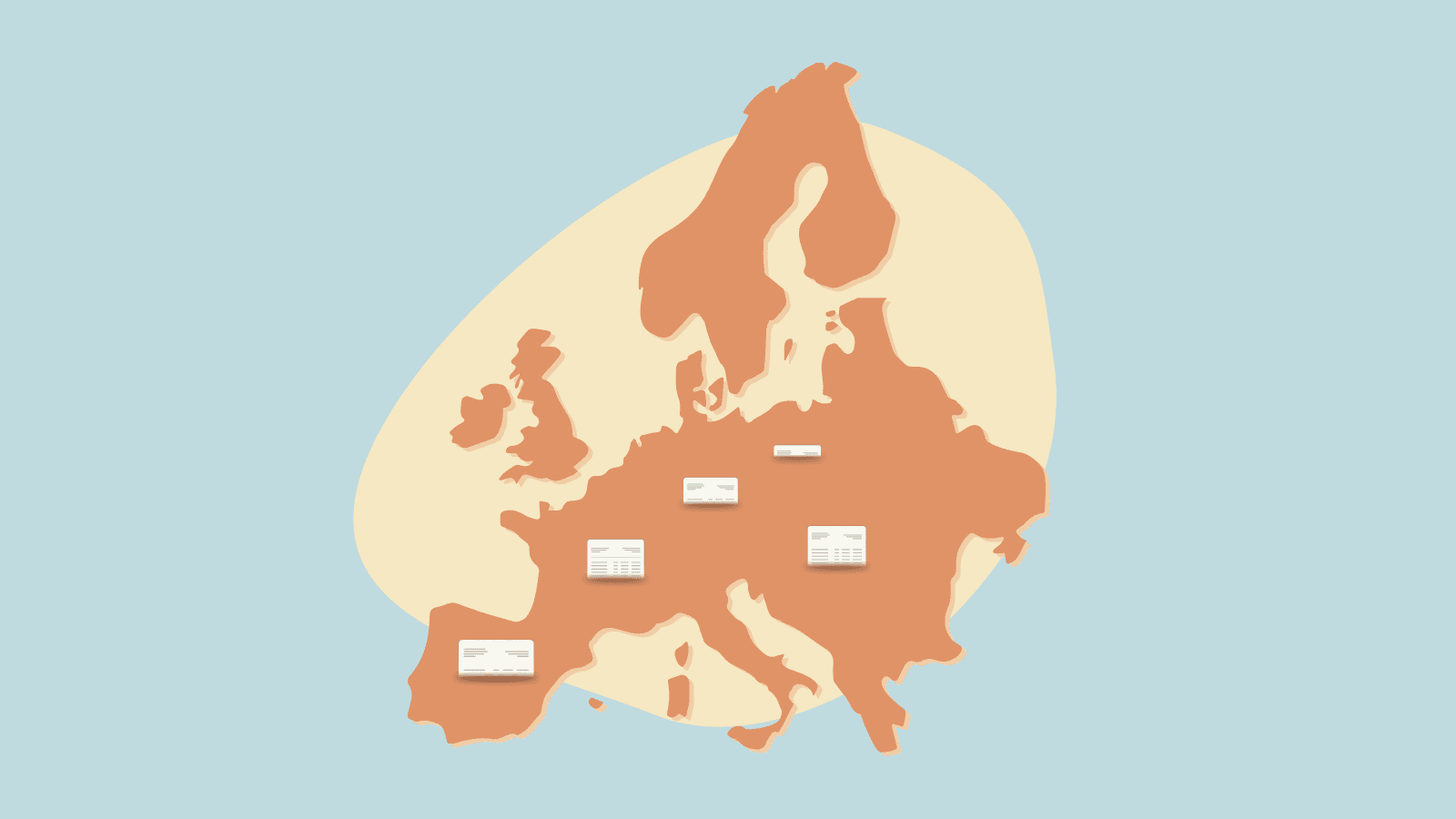
You sell a SaaS subscription to a business in France. A few digital downloads go to consumers in Spain, and a license renewal to a company in Italy. None of those sales produces a French electronic invoice. So when the e-invoicing headlines land, you assume they are somebody else's problem.
They are not. What catches you is e-reporting: the obligation to transmit transaction data electronically to a tax authority even when no electronic invoice ever changes hands. In EU law it goes by a blander name, digital reporting requirements.
Short answer: E-reporting is the obligation to transmit transaction data electronically to a tax authority, separately from any invoice your customer receives.
Most coverage of Europe's invoicing reforms is about the invoice. The reporting limb gets a paragraph near the end. Yet it is the limb that applies to businesses selling across borders and direct to consumers.
This guide covers what e-reporting is and how it differs from e-invoicing. Then the four models European countries have built, which countries require what today, and what changes on 1 July 2030, when the EU's own digital reporting requirements come into force.
What is e-reporting?
Under an e-reporting mandate, the tax authority stops waiting for your VAT return. It requires a structured feed of your sales instead: what you sold, who bought it, how much tax applied. Nothing about that changes the document your customer receives.
That is the whole mechanism. It is worth stating plainly, because the vocabulary around it is a mess. The same obligation travels under at least four names:
- Digital reporting requirements, or DRR. The European Union's own legal term, and now the heading of Title XI, Chapter 6 of the VAT Directive.
- Real-time VAT reporting and transaction reporting. These describe the timing and the object rather than the legal instrument.
- Continuous transaction controls, or CTC. The tax technology industry's term for the whole family of near-real-time controls, clearance e-invoicing included.
- E-reporting. The term France's reform popularized, now used well beyond France.
They are not perfectly interchangeable, and the differences matter when you are reading a national rulebook. But they all describe the same shift: from telling a tax authority what you sold months afterwards, to telling it as you go.
Three kinds of sale usually land in the reporting limb rather than the invoicing one:
- Sales to consumers, where there is no business counterparty to receive a structured invoice.
- Cross-border sales, in or out of the country holding the mandate.
- Payment data, in countries that ask for it, for businesses accounting for tax when they get paid rather than when they invoice.
E-reporting vs e-invoicing: what is actually different
These are two limbs of the same reform, not alternatives. A business can be in scope for both, for one, or for neither. Which one catches you usually comes down to your counterparty and whether the sale crosses a border.
| E-invoicing | E-reporting | |
|---|---|---|
| What is transmitted | The invoice itself, in a structured format | An extract of transaction data |
| Who receives it | Your customer, and usually the tax authority too | The tax authority only |
| Typical scope | Domestic B2B between established businesses | B2C, cross-border, and payments |
| Does your customer see it | Yes, and they may need it to deduct VAT | No |
| Timing | At issuance, sometimes before the buyer can receive it | Periodically, or within days of the transaction |
| If you get it wrong | The document may have no legal force, and your buyer's deduction can be at risk | Fines per missed or late transmission |
The commercial difference is the one to internalize. An electronic invoice is a document somebody else depends on, so getting it wrong breaks your customer's accounting as well as your own. A report goes into a government system and comes back out only if you are audited, or if the numbers do not reconcile.
Here is where businesses get their obligation backwards. They read that a country has mandated e-invoicing. They note that they do not issue domestic B2B invoices there, and conclude they are out of scope.
The invoicing limb genuinely does not apply. The reporting limb does, and it is the one with no customer-facing signal to remind you it exists. For the invoicing side in depth, see our guide to what e-invoicing is.
Why every EU country is mandating e-reporting at once
Compliance deadlines across Europe have bunched up in 2026 and 2027 in a way that looks like coincidence. It is not.
Until 2025, a Member State that wanted to force domestic e-invoicing had to ask the EU for permission. Article 395 of the VAT Directive required a derogation, requested and granted case by case. That is why the early mandates arrived one country at a time, on individually negotiated timetables.
Council Directive (EU) 2025/516, the VAT in the Digital Age package, removed that gate. Since it entered into force on 14 April 2025, the amended Article 218 lets a Member State require electronic invoices for domestic supplies without asking first. It can also drop the requirement that the buyer consent. The queue cleared, and everyone who had been waiting moved at once.
The second driver is money. The EU puts its VAT gap at €93 billion for 2020, the difference between VAT that should have been collected and VAT that was. Missing-trader intra-community fraud accounts for an estimated €40 to €60 billion of that.
The Commission expects e-invoicing to cut VAT fraud by up to €11 billion a year. It also expects EU traders to save over €4.1 billion a year in administrative and compliance costs across the next decade.
Removing the permission requirement harmonized nothing, though. Which is why the systems now in force look so little like each other.
The four models of e-reporting
The industry calls this whole family continuous transaction controls. The name marks the break from what came before: the post-audit model, where you filed a periodic return and a tax authority checked your records later, if it ever checked at all.
The model diversity has an origin worth knowing. Digital tax reporting did not start with e-commerce. It started in retail, with fiscalization.
Italy mandated certified fiscal cash registers with tamper-proof fiscal memory in the 1980s. Romania followed in the early 2000s, Serbia in 2012. The machines collected VAT data that nobody could alter, then transmitted it to the tax authority's server. Every modern model is that idea applied to a new kind of transaction.
| Model | What you transmit | When |
|---|---|---|
| Periodic reporting | Aggregated listings or a full accounting file | Monthly or with the VAT return, after the fact |
| Real-time reporting | An extract of invoice data | Within hours or days of issuing |
| Clearance e-invoicing | The invoice itself, for validation | Before the invoice is valid or reaches the buyer |
| Mixed | Invoices for domestic B2B, data for everything else | Both, on separate calendars |
Periodic reporting: VAT listings and SAF-T
The gentlest end of the spectrum. VAT listings are aggregated transactional data, usually filed alongside the return: sellers, buyers, taxable amounts, tax amounts.
SAF-T goes considerably further. Built on an OECD standard, it is a structured file reaching past indirect tax into your accounting records, and in some implementations into direct tax data. Romania and Portugal both run SAF-T obligations, and Poland's JPK files are a variant of the same idea.
What defines this model is that it is periodic and retrospective. Nothing you file changes whether a document is valid.
Real-time reporting: invoice data within hours or days
Real-time VAT reporting transmits a subset of invoice data to the tax authority at or very near the moment of issue. The important detail, and the one most often missed: the invoice itself is not transmitted. Only an extract goes, which is why real-time reporting coexists happily with PDF or even paper invoices.
This is the model the term e-reporting most often describes in practice. Spain's SII wants submission within four working days of issuing. Hungary's system wants the data inside 24 hours, in XML, generated straight from your accounting or ERP system without human intervention.
Clearance e-invoicing: the authority validates before the buyer sees it
Here the tax authority sits in the transaction path. The invoice has no legal validity until the authority has validated it, and in the strictest implementations the buyer cannot receive it until then.
Italy's Sistema di Interscambio is the archetype. It validates the format, runs its checks, converts European-format invoices into the national FatturaPA standard, then routes the document onward.
The alternative arrangement sends the invoice to the buyer over a network while data goes to the authority in parallel. That is what France and Belgium have built, and what Peppol is designed for.
Mixed models: reporting and invoicing together
The direction of travel. France and Belgium both pair an invoicing obligation for domestic B2B with a reporting obligation for everything else. This is the shape the EU is pushing everyone toward.
Which of these four catches you depends less on your industry than on where you are established and who you are selling to.
Who e-reporting applies to, and the non-established trap
Three variables decide your obligation:
- Establishment. Whether you have a fixed establishment in the country.
- Registration. Whether you merely hold a VAT number there.
- Customer type. Whether you sell to businesses or to consumers.
The distinction between the first two is what surprises people. Establishment is what usually triggers the e-invoicing obligation. Registration alone often does not. So you can hold a VAT number in a country, have no fixed establishment there, and be entirely exempt from the invoicing mandate. You are still fully caught by the reporting one.
France states this outright. The DGFiP's guidance for foreign businesses with no permanent establishment confirms that the e-invoicing component does not concern them. It then sets out the e-reporting they do owe on French transactions: intra-community acquisitions in France, B2C operations subject to French VAT, and payment data on services. Large companies report from 1 September 2026, everyone else from 1 September 2027.
The trap: the trigger is often a VAT registration you took out years ago and stopped thinking about. A number opened for a warehouse, a local entity that never grew, or a market you entered before One Stop Shop existed is enough to pull you into a national reporting regime.
One thing to keep separate. If you run a marketplace or platform, you also have platform reporting obligations under DAC7. That is a different regime, with different data and different deadlines, and a single business can be caught by both.
E-reporting across Europe, country by country
| Country | Model | Status and key dates |
|---|---|---|
| Italy | Clearance | B2B and B2C mandatory since 1 January 2019. Turnover exemption removed entirely in January 2024 |
| Spain | Real-time, plus clearance | SII since July 2017 above €6 million turnover. VeriFactu from 1 January 2026 for everyone outside SII |
| Hungary | Real-time | Since 2018, extended to all B2B and B2C with no value threshold on 1 January 2021 |
| Romania | Clearance, plus SAF-T | RO e-Factura B2B since 1 January 2024. SAF-T reached small taxpayers on 1 January 2025 |
| France | Mixed | E-invoicing and e-reporting from 1 September 2026 for large companies, 1 September 2027 for everyone else |
| Poland | Clearance | KSeF from 1 February 2026 above PLN 200 million turnover, all B2B from 1 April 2026 |
| Belgium | Mixed, phased | B2B e-invoicing over Peppol from 1 January 2026. Near-real-time VAT reporting planned for 2028 |
| Germany | E-invoicing only, so far | Receiving mandatory since 1 January 2025. Issuing from 1 January 2027 above €800,000 turnover, all businesses from 1 January 2028. No reporting obligation yet |
| Greece | Periodic, moving to real-time | myDATA prefills VAT returns since 1 January 2024 and income tax returns since 1 January 2025. No B2B e-invoicing mandate yet |
| Portugal | Periodic | Monthly SAF-T since January 2023. Accounting SAF-T becomes mandatory from 2027. No B2B mandate |
France is the reason most people meet the term at all, and its reform is the most explicit about the split. There are three limbs, not one: e-invoicing for domestic B2B, transaction reporting for everything else, and payment reporting for businesses accounting for VAT on collection.
Reporting frequency is set by your tax regime, not by a single national deadline:
- Monthly régime réel normal: by décade, three times a month, ten days after each period closes.
- Quarterly filers: monthly, before the 10th.
- Simplified regime: monthly, between the 25th and the 30th.
- VAT franchise: every two calendar months.
Full detail is in our guide to electronic invoicing in France.
Spain runs two systems side by side. SII has required near-real-time reporting since July 2017 from businesses above €6 million in turnover, plus VAT groups and the monthly refund register. It covers every transaction regardless of value, due within four working days.
Everyone below that threshold moves to VeriFactu from 1 January 2026, with certified software and invoice clearance. See electronic invoicing in Spain and our guide to VeriFactu in English. The broader B2B mandate from the Crea y Crece law is still waiting on its technical regulations.
Italy has had the strictest regime in Europe for the longest. Since 2022, cross-border transactions are reported by transmitting each invoice to the Sistema di Interscambio, which folded the old separate cross-border return into the main system.
Germany is the useful counterexample, because it shows the two limbs coming apart. Receiving electronic invoices has been mandatory since 1 January 2025. Issuing phases in from 1 January 2027 for businesses above €800,000 in turnover, and from 1 January 2028 for everyone else.
And there is still no transaction reporting obligation at all. Germany built the invoicing side first and left the reporting side for ViDA to define. Details in electronic invoicing in Germany.
Romania requires B2B invoices through RO e-Factura within five days, and applies the obligation to businesses VAT-registered in Romania without being established there. It also runs SAF-T and, separately, e-Transport for high-risk goods movements.
Portugal is the quiet SAF-T case. No B2B invoicing mandate, but a monthly file since 2023 and an accounting file coming in 2027. Details in electronic invoicing in Portugal.
ViDA and the EU's own digital reporting requirements
All of this national divergence has an expiry date written into EU law. VAT in the Digital Age was adopted on 11 March 2025 and entered into force on 14 April 2025. It is not a proposal any more.
ViDA has three pillars: digital reporting requirements, single VAT registration, and new rules for the platform economy. The reporting pillar is the one that reshapes everything above.
| Date | What changes |
|---|---|
| 14 April 2025 | Member States can mandate domestic e-invoicing without an EU derogation, and can drop the buyer-consent requirement |
| 1 January 2027 | Clarifications to the One Stop Shop and Import One Stop Shop schemes |
| 1 July 2028 | Deemed supplier rules for short-term accommodation and passenger transport platforms, and the single VAT registration measures |
| 1 July 2029 | Legacy recapitulative statement provisions are deleted |
| 1 July 2030 | EU digital reporting requirements apply to cross-border B2B. Electronic invoicing becomes the default, and the EC Sales List disappears |
| 1 January 2035 | Deadline for Member States with pre-existing domestic real-time systems to align them with the EU model |
From 1 July 2030, cross-border B2B supplies get reported transaction by transaction. The structured electronic invoice becomes the default document, and the deadline for issuing a cross-border invoice drops to ten days after the chargeable event.
Three points where the common summaries are wrong, and worth getting right.
The five-day rule is not what it sounds like. You will read that cross-border data must reach the tax authority within five days of the invoice being issued. The directive is more specific. The supplier transmits at the time the invoice is issued or should have been issued, with no five-day grace. The five days apply to two narrower cases: self-billing, where the customer issues the invoice on the supplier's behalf, and the customer's own reporting obligation, counted from receipt.
Domestic reporting stays optional. The new Article 271a says Member States may require domestic transaction reporting. It does not oblige them to. ViDA harmonizes how a domestic system must work if a country builds one, not whether it has to.
The EC Sales List goes away. If you file recapitulative statements today for intra-community supplies, that obligation is abolished. The same transactions fall inside the new reporting requirements instead, with more detail and better timing.
The 1 January 2035 date explains the apparent contradiction in the country table. Member States that already had a domestic real-time reporting obligation running before 2024 get an extra five years to converge. That is why Spain's SII and Hungary's system are not being rebuilt next year, and why the fragmentation you live with now persists for another decade.
What e-reporting does not do
It does not replace your VAT return. In almost every regime you still file, and pre-filled returns remain a promise more than a practice. Greece has gone furthest, and even there myDATA prefills a form you still submit.
It does not harmonize anything by itself. Two countries running the same model still differ on formats, frequency, thresholds, correction rules, and what counts as a late transmission.
It does not relieve you of issuing a compliant invoice. Reporting satisfies the tax authority. It says nothing about the document your buyer needs under national rules.
It does not travel. Registering in a new country means a new system, a new format, a new deadline calendar, and usually a new intermediary.
The limitation: nothing about your existing setup carries over automatically. This is the assumption that catches businesses expanding market by market.
And it is not the same thing as fiscalizing a cash register, nor the same as platform reporting under DAC7. One business can be caught by all three at once, and they share no infrastructure.
How to prepare for an e-reporting mandate
- Start from your VAT registrations, not the headlines. List every country where you are established or registered, then check each against its own regime and dates. The headline national date is rarely your date, because scope is almost always phased by size or turnover.
- Split your transactions by type. Domestic B2B, cross-border B2B, B2C. That split, not your sector, determines which limb catches you.
- Check whether the data even exists in your systems. This is the step that actually causes failures.
Most reporting problems are data problems rather than filing problems:
- A missing customer VAT number.
- A credit note that cannot be matched to the invoice it corrects.
- A payment you cannot tie back to a transaction.
- A currency conversion nobody recorded.
A reporting mandate turns those quiet gaps into rejected transmissions and per-transmission fines. France, for instance, sets a penalty of €500 for each missed or late e-reporting transmission, capped at €15,000 a year.
Fix the data first. The transmission mechanics are the easy part, and they are what your platform or provider handles anyway. For the security side of moving invoice data through these systems, see our e-invoicing compliance best practices.
If one of these regimes already applies to you, the country guide is the next step. France is the most imminent, with e-reporting starting 1 September 2026, and electronic invoicing in France covers the platforms, the data and the deadlines in full.
Note: At Quaderno we love providing helpful information and best practices about taxes, but we are not certified tax advisors. For further help, or if you are ever in doubt, please consult a professional tax advisor or the tax authorities.
Frequently Asked Questions
What is e-reporting?
E-reporting is the obligation to transmit transaction data electronically to a tax authority, separately from any invoice your customer receives. The authority gets a structured extract of what you sold, to whom, and how much VAT applied. It is also called digital reporting requirements, real-time VAT reporting, or continuous transaction controls.
What is the difference between e-reporting and e-invoicing?
E-invoicing transmits the invoice itself in a structured format, and your customer relies on that document. E-reporting transmits data about the transaction to the tax authority only, and your customer never sees it. As a rule of thumb, domestic B2B sales trigger e-invoicing while sales to consumers and cross-border sales trigger reporting.
Which European countries require e-reporting?
Italy, Spain, Hungary, Romania and Portugal already run reporting or clearance systems. France starts e-reporting on 1 September 2026, Poland's KSeF phases in during 2026, Belgium mandates e-invoicing from January 2026 with near-real-time reporting planned for 2028, and Greece reports through myDATA. The models differ significantly even where the obligation exists.
Does e-reporting apply if my business is not established in the country?
Often yes, and e-reporting is frequently the only limb that applies. Establishment usually triggers the e-invoicing obligation, so a business that is merely VAT-registered in a country can be exempt from e-invoicing while still having to report. France states this explicitly for foreign businesses with no permanent establishment.
When do the EU's digital reporting requirements start?
The EU-wide digital reporting requirements apply from 1 July 2030 for cross-border B2B transactions. Member States that already ran a domestic real-time reporting system have until 1 January 2035 to align it with the EU model. National obligations run on their own, earlier calendars.
Is e-reporting the same as continuous transaction controls?
Continuous transaction controls, or CTC, is the umbrella term for near-real-time tax controls in general. E-reporting is one family within it, sitting alongside clearance e-invoicing, where the tax authority validates the invoice before it reaches the buyer.
Keep reading
E-invoicing in France: requirements and deadlines for the September 2026 mandate
France's B2B e-invoicing mandate starts on 1 September 2026. Here's who has to receive, who has to issue, what counts as an electronic invoice, and how the approved platforms work.
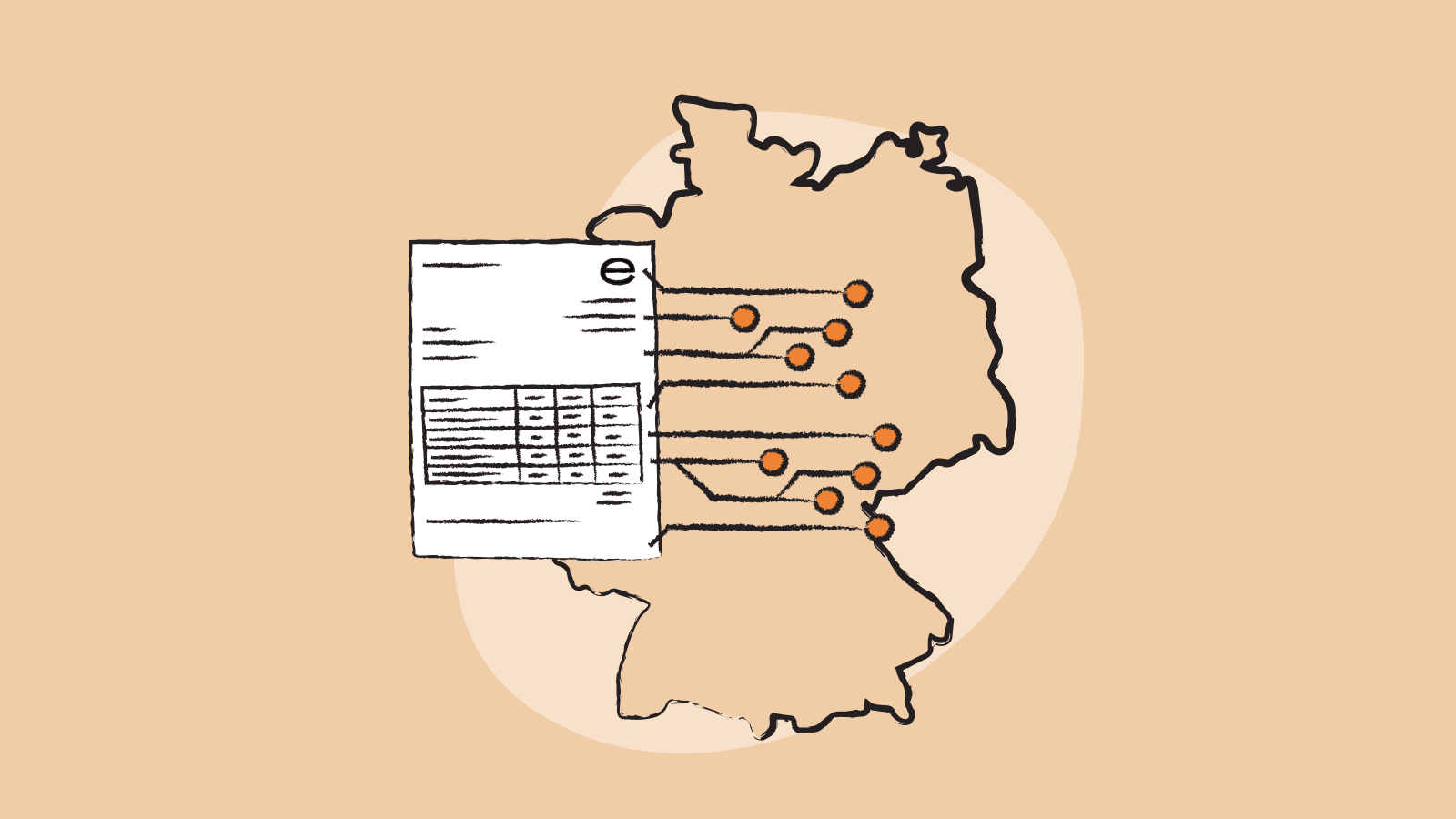
Germany E-invoicing & Digital Reporting Requirements
German e-invoicing & e-reporting rules apply to all B2B businesses. Learn about how electronic invoices work, when it’s required & how to comply.
E-invoicing in Spain & Digital Reporting Requirements
Spanish e-invoicing & e-reporting rules apply to all B2B businesses. Learn about how electronic invoices work, when it’s required & how to comply.
E-invoicing compliance: Six best practices for global VAT/GST data security
Master e-invoicing compliance with six proven best practices for encryption, API security, and data retention across global VAT/GST systems.
E-Invoicing: What It Is, How It Works & EU Requirements
Learn what e-invoicing is, why it's mandatory in many countries, and how to implement it. Streamline compliance and get paid faster today.