You're here:
What is a proforma invoice? Uses, contents and VAT status
In this article
- What is a proforma invoice?
- Proforma invoice vs invoice, quote and purchase order
- Why a proforma is not a tax document
- Should you show VAT on a proforma invoice?
- What happens when someone pays a proforma
- What to include on a proforma invoice
- Proformas for customs and export
- Keeping proformas out of your invoice records
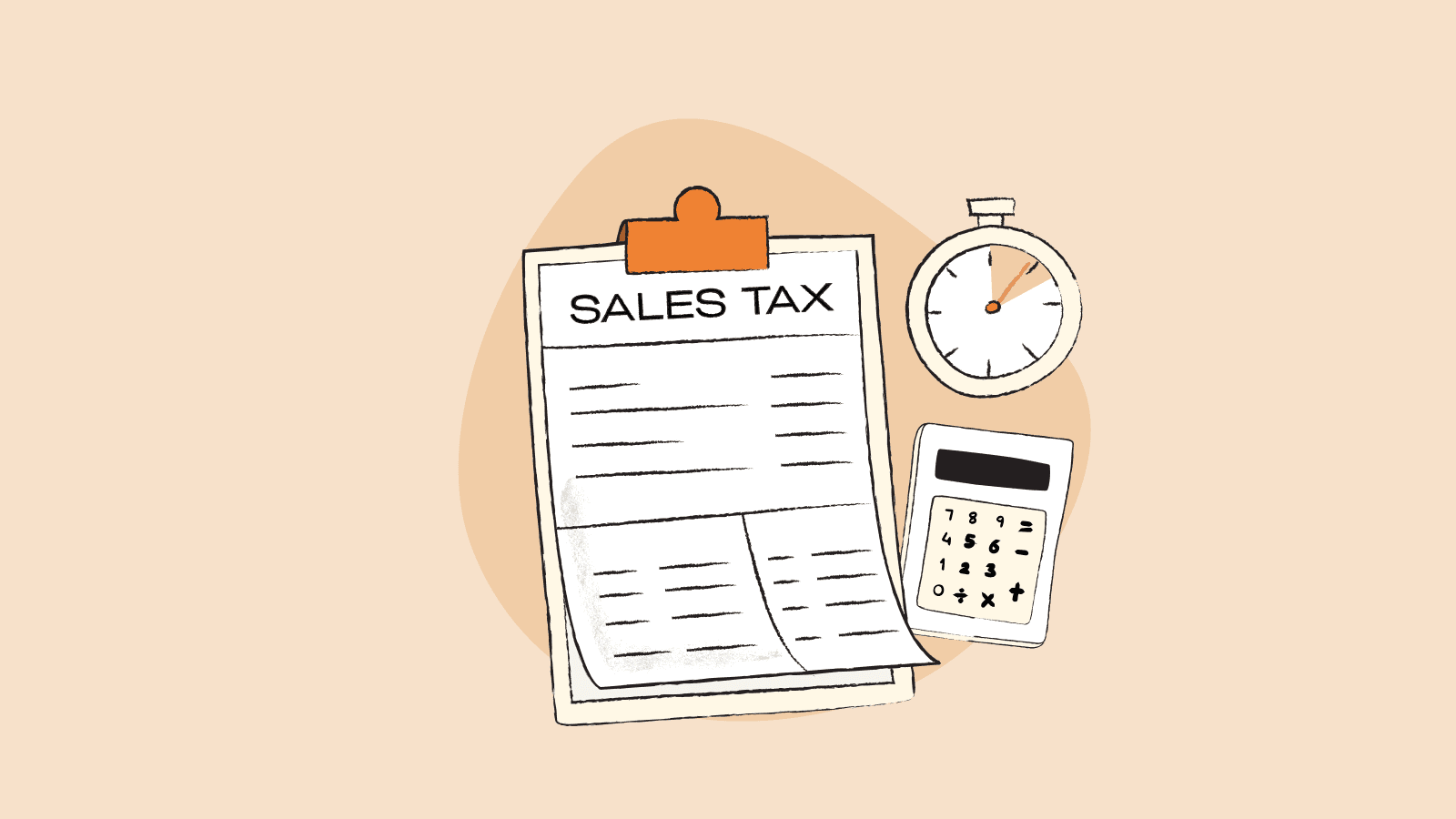
A customer asks for a proforma invoice so their finance team can raise a purchase order. You send one. Three weeks later your bookkeeper wants to know why invoice number 1043 has no matching payment, why it is sitting in the sales ledger, and whether you have already declared VAT on a sale that has not happened.
Every part of that is avoidable, and it comes from treating a proforma invoice as a kind of invoice. It is not one, in any sense your accounts recognize.
Short answer: A proforma invoice is a document a seller sends before a sale is finalized, setting out what is being supplied and what it will cost. It does not record a sale that has happened; it describes one that is proposed.
This post covers what a proforma invoice actually is, how it differs from an invoice, a quote and a purchase order, why it has no VAT status at all, what belongs on one, and what changes the moment a customer pays it.
What is a proforma invoice?
The US International Trade Administration puts it as well as anyone: a proforma invoice is a quote in an invoice format.
That format is usually the whole reason it exists. A buyer's procurement process may need a document that looks like an invoice before it can raise a purchase order, arrange a letter of credit, or apply for an import license. A plain quote will not pass through those systems. A proforma will.
What it is not is a demand for payment, or a record of anything that has actually taken place yet. The name is the clue: pro forma means "for the sake of form".
One housekeeping note before we go on. Proforma, pro forma and pro-forma are the same document. This post uses the closed spelling throughout, except inside quotations, where the source's own spelling is preserved.
Proforma invoice vs invoice, quote and purchase order
Four documents do overlapping jobs, and the useful distinction is not what they look like. It is who is committing to what, and whether anything enters your accounts.
| Document | Who issues it | What it means | Enters your accounts? |
|---|---|---|---|
| Quote | Seller | An offer, in the seller's own format | No |
| Proforma invoice | Seller | The same offer, formatted like an invoice | No |
| Purchase order | Buyer | The buyer committing to buy | No, until fulfilled |
| Invoice | Seller | A demand for payment for a supply made | Yes |
Only the last row is an accounting document. That single column is what the rest of this post is about.
A fifth document turns up in export: the commercial invoice, which is the final customs document for a shipment. The proforma is its provisional cousin, and the two are covered together further down. For the wider tour of document types, we cover the most common types of invoices separately, and what makes an invoice a tax invoice in its own guide.
Why a proforma is not a tax document
HMRC is unusually blunt about this, for a tax authority. A pro-forma invoice, it says, "in normal circumstances, cannot be considered to be an accounting document".
Three things follow, and almost nobody spells them out.
It is not a VAT invoice
Your customer cannot use a proforma to reclaim input VAT. If they try, their claim fails and they come back to you for the real document, usually at an inconvenient moment.
It does not create an output VAT liability for you either. No supply has been made, so there is nothing yet to account for.
It has no place in your books
HMRC's wording again: a pro-forma "has no place in the books of account of the trader either issuing or receiving it". Three practical consequences:
- It must not take a number from your invoice sequence. Invoice numbering has to be sequential and unbroken. A proforma that consumes number 1043 either leaves a hole when no invoice follows, or produces a duplicate when one does. Both are exactly what an auditor looks for.
- It must not sit in your sales ledger. Nothing has been sold.
- It must not count toward revenue, and it does not belong anywhere in a VAT return.
Give proformas their own reference series, clearly distinct from your invoice numbers. PF-001 and INV-001 can coexist. PF-1043 and INV-1043 will cause an argument eventually.
Say so on the document
HMRC advises that a pro-forma "should always be clearly described as such and should preferably be endorsed 'This is not a VAT invoice'".
Worth noticing that US trade guidance arrives at the same instruction from a completely different direction, recommending the document be marked as not being an invoice. Two authorities, two jurisdictions, two rationales, one label. Put it on.
Should you show VAT on a proforma invoice?
Usually yes, and the reason is the document's whole purpose. A proforma exists to tell the buyer what this will cost. VAT is part of what it will cost, so leaving it off produces a number the buyer cannot rely on.
Showing VAT is not the same as charging it. The document remains an estimate, and the endorsement makes clear it cannot be used to reclaim anything.
Three cases where you would not show it:
- You are not registered for VAT, so there is none to show.
- The supply is exempt or zero-rated.
- The sale falls outside the scope of your VAT system altogether.
Cross-border adds a wrinkle worth getting right. The rate you show should be the rate that will actually apply on the real invoice, which for a cross-border sale may not be your own country's rate at all. On a B2B sale where the reverse charge applies, the correct proforma shows no VAT and says why, so the buyer knows to account for it themselves rather than assuming you forgot. Our guide to handling VAT, GST and sales tax on physical products covers how the applicable rate gets determined.
What happens when someone pays a proforma
A proforma is not a demand for payment. Customers pay them anyway, constantly, because the document looks like an invoice and their accounts payable system treats it like one.
At that point the situation changes, and not optionally.
Receiving payment before delivery creates a tax point on the payment date. HMRC's VAT guide sets out the basic tax point as when goods are delivered or services completed, and adds that "an actual tax point is created if payment is received before the basic tax point occurs", with the payment date becoming the tax point instead.
HMRC applies that directly to proformas: "If payment is made, the goods or services will be supplied and a VAT invoice should be issued for accounting purposes".
So the sequence is fixed:
- Payment arrives.
- A tax point is created on that date.
- You issue a proper VAT invoice, with its own sequential number.
- That invoice is the document that enters your books.
The failure mode is treating the paid proforma as the invoice and moving on. What follows is a payment with no matching invoice, VAT landing in the wrong period or not at all, and a numbering sequence that stops reconciling. It is a tedious thing to unpick months later.
Should you pay a proforma invoice you receive?
The same question from the other side of the transaction, and the answer is that paying one is normal. Suppliers routinely ask for payment up front on a first order, and a proforma is the document they use to request it.
What you should not do is file it as a purchase invoice. You cannot reclaim VAT on it, so it should sit outside your accounts payable records until the real invoice arrives. If it does not arrive within a reasonable time after you have paid, chase it. That invoice is what supports your VAT reclaim, and without it you have paid the VAT and cannot recover it.
What to include on a proforma invoice
There is no prescribed format, which is exactly why it is worth being deliberate:
- The words "Proforma invoice", plus the endorsement that it is not a VAT invoice
- A reference number from a series that is not your invoice sequence
- The issue date, and a validity or expiry date
- Seller and buyer details, including VAT numbers where relevant
- A description of the goods or services, with quantity and unit price
- The VAT treatment you expect to apply, and the estimated total
- Delivery terms and an estimated delivery date
- Payment terms
The validity date deserves more attention than it usually gets. A proforma is an estimate, and one without an expiry is an open-ended commitment on prices that move. Put a date on it.
For export shipments, more is expected. Trade.gov lists eleven recommended elements, including Incoterms with the named delivery point, the estimated shipping date and a validity date.
Proformas for customs and export
In export the document does a different job, and it is often not optional. A proforma may be required, trade.gov notes, "for import licensing, inspections, letters of credit, or currency transfers", because it provides "detailed information that buyers need in order to legally import the product".
Two things to keep straight.
1. It is not the final customs document. The commercial invoice is. The proforma is provisional, and a shipment that clears on a proforma will still need the commercial invoice behind it.
US rules put a clock on that. Where the required invoice is not available when entry documentation is filed, 19 CFR § 141.91 allows entry to be accepted on a proforma, with the commercial invoice generally to follow within 120 days of the entry summary being filed. That window shortens to 50 days where the invoice is needed for statistical purposes, and extensions can be granted for good cause. Either way a proforma buys time at the border rather than replacing the document you still owe.
2. The delivery term belongs on it. Incoterms are among trade.gov's recommended elements for good reason: the term you agree decides who acts as importer of record and who pays the import VAT and duty. Getting that wrong on the proforma sets the buyer's expectation at the wrong number, and our guide to DDP versus DAP covers what each choice actually commits you to.
One more line from trade.gov is worth keeping in mind, because it is the closest thing to a commitment this document carries: "changes should not be made without the buyer's consent". A proforma is not binding, but it is not costless to revise either.
Keeping proformas out of your invoice records
Every problem above is the same problem: a proforma behaving like an invoice. It takes a number from the sequence, lands in the ledger, and is still sitting there when the real invoice is raised against the same sale.
The fix is mostly discipline about which document is which. Keep proformas in their own numbering series, keep them out of your accounting records, and make sure the invoice that follows is a proper one: sequentially numbered, with the correct tax treatment for the transaction and the customer's location.
That last part is what Quaderno handles. Tax is determined per transaction based on what was sold and where the customer is, customer tax numbers are validated as they are collected, and the invoice that enters your records carries the right treatment from the start.
The proforma is a sales document. The invoice is an accounting one, and only one of them should reach your books.
Proformas are not the only document that gets mistaken for an invoice. A credit note sits at the other end of the same sale, correcting an invoice that has already been issued, and it has its own rules about numbering and what it does to your VAT return.
Once the proforma is paid, the document that matters is the invoice that replaces it. Our guide to what a tax invoice must contain covers what that document needs to be valid.
Note: At Quaderno we love providing helpful information and best practices about taxes, but we are not certified tax advisors. For further help, or if you are ever in doubt, please consult a professional tax advisor or the tax authorities.
Frequently Asked Questions
What is a proforma invoice?
A document a seller sends before a sale is finalized, setting out what is being supplied and what it will cost. It looks like an invoice but is not one: it is not a demand for payment and it does not record a completed sale.
Is a proforma invoice a legal document?
A proforma invoice is not binding the way a contract is, and HMRC does not treat it as an accounting document. It does carry commercial weight, and in an export context US trade guidance says its terms should not be changed without the buyer's consent.
Can you reclaim VAT on a proforma invoice?
No. A proforma is not a VAT invoice, so your customer cannot use one to reclaim input VAT. They need the real invoice that follows it.
Should a proforma invoice have an invoice number?
It should carry a reference number, but not one taken from your invoice sequence. Invoice numbering has to stay sequential and unbroken, and a proforma that consumes a number corrupts that sequence.
What happens if a customer pays a proforma invoice?
You issue a proper VAT invoice. Receiving payment before delivery creates a tax point on the payment date, and HMRC's position is that once payment is made a VAT invoice should be issued for accounting purposes.
What is the difference between a proforma invoice and an invoice?
A proforma proposes a sale; an invoice records one and demands payment for it. Only the invoice enters your books, creates a tax point, and can support a VAT reclaim.
Keep reading
What Is a Tax Invoice? Requirements, Formats & Compliance
What is a tax invoice and why is it required? Learn the key elements, when to issue one, and how to simplify invoicing for VAT, GST & sales tax compliance.
The Most Common Types of Invoices for Your Business
Confused about invoices? Discover the most common types of invoices, when to use each, and how they simplify payments and tax compliance.
How to Prepare a VAT Return: Boxes and a Worked Example
A VAT return is a summary, not a transaction list, and preparing one is mostly a data problem. Here are the four figures it needs, what belongs in each box, and a full quarter worked through twice.

DDP vs DAP explained: who pays import VAT and duty
DDP and DAP put the goods at the same door. The difference is who clears them and who is liable for the import VAT, which is a tax question long before it is a shipping one.

How to handle sales tax for physical products around the world
Selling physical goods? Learn how VAT, GST & sales tax apply globally, and discover tools to simplify compliance across multiple countries.